
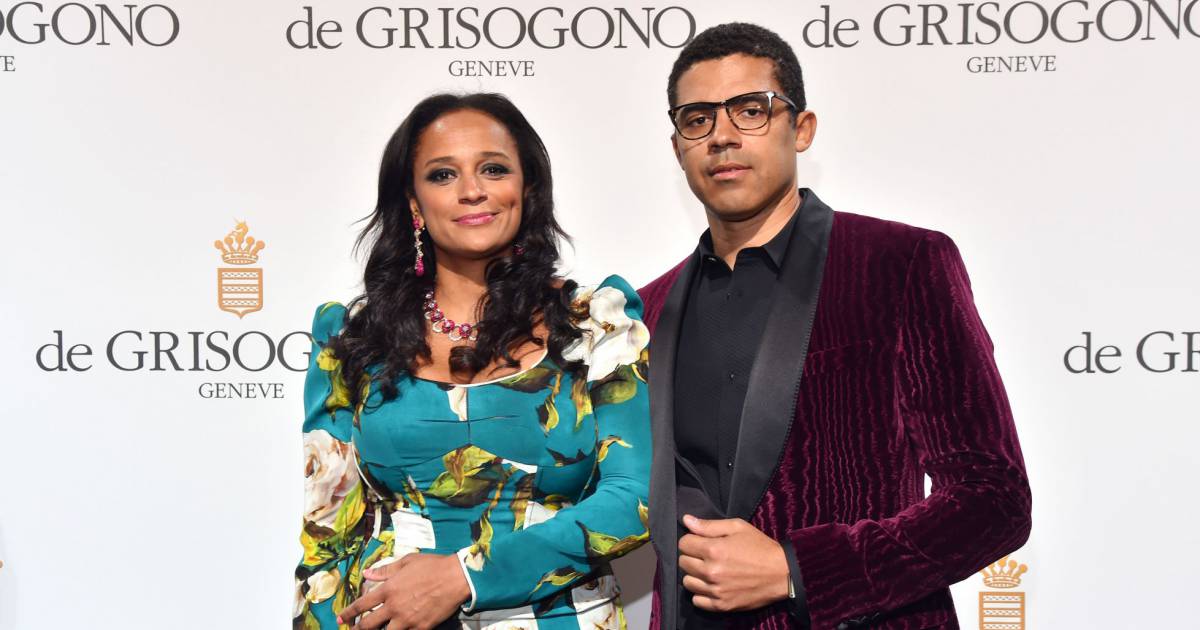
As is well known, Sindika Dokolo is Congolese (in addition to Danish and Angolan), belonging to a wealthy family from Mobutu’s time. His father, Augustin Dokolo, was one of dictator Mobutu’s chief bankers before he felt into disgrace and being left without the bank. Sindika himself went on a collision course with former President Joseph Kabila, eventually being sentenced by a Congolese court to a year in prison for certain shady business. This prevented him from entering the country for a while.
Once again, President João Lourenço met with Félix Tshisekedi, President of the Democratic Republic of Congo, this time in Benguela.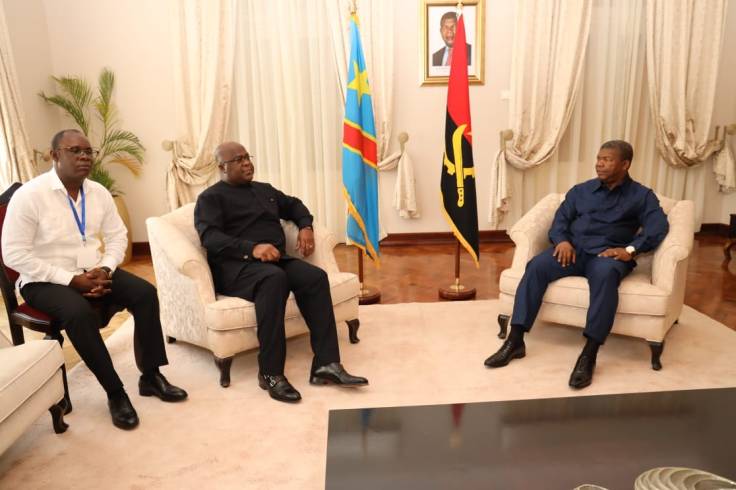
The meeting resulted in an official statement in which it was reported that the two leaders had dealt with matters concerning the Oil Exploration Common Interest Zone and analysed the consequences of the ruling by the Luanda Provincial Court, which seized the assets of Isabel dos Santos and her husband, Sindika Dokolo. On this subject, which occupies most of the statement, both Presidents affirmed their firm commitment to the fight against corruption and impunity, as well as their decisive determination to guarantee a peaceful transition in both countries towards democracy and economic progress.
It seems that after all, contrary to what we started to write at the beginning of the text, the issue of Isabel dos Santos is also part of the relations between Angola and Congo-Kinshasa, and the meeting between the Presidents was linked to this current hot topic.
It is not surprising that the fight against corruption and the problems raised by the country’s former powerful elite are part of the common concerns of Lourenço and Tshisekedi.
The current president of Congo has been in office since January 2019, succeeding Joseph Kabila, who was president for 18 years. As José Eduardo dos Santos did to Lourenço, Kabila left the power trapped. In fact, in Congo, Kabila’s influence is still being felt in a decisive way, since the Constitution, unlike Angola´s, does not confer broad powers on the President. It is a semi-presidential constitution. Thus, Tshisekedi must live with a parliamentary majority and a prime minister trusted by his predecessor, who, having surrendered the presidency of the Republic, did not surrender the Parliament. Clearly, Kabila was more skilled than Dos Santos. The path Tshisekedi will endure is long and arduous.
In fact, the main problems of the two Presidents are identical: extremely corrupt countries where a small elite appropriated most of the resources. In this sense, it seems that João Lourenço is trying to form a reformist bloc in this area of Africa, betting on the reconfiguration of political regimes and freeing them as much as possible from corruption. He may have found a needy ally in Tshisekedi. There is here a slight possibility of creating a pro-democracy and pro-progress alliance that would be unprecedented in these two countries. Essentially, Angola and the DRC have mostly known only wars, loot and poverty, throughout their history.
Lourenço had already played an influential role in the peaceful transition in Congo between Kabila and Tshisekedi. Several sources confirm his pivotal role in persuading Kabila to step aside, securing him a sanctuary in Angola, if necessary, and in supporting the new Congolese president, both in wielding his power and dealing with Rwanda.
However, in addition to the strengthening of relations between the two countries and the creation of an anti-corruption bloc between Angola and Congo, another issue must have been addressed by the two leaders.
As is well known, Sindika Dokolo is Congolese (in addition to Danish and Angolan), belonging to a wealthy family from Mobutu’s time. His father, Augustin Dokolo, was one of dictator Mobutu’s chief bankers before he felt into disgrace and being left without the bank. Sindika himself went on a collision course with former President Joseph Kabila, eventually being sentenced by a Congolese court to a year in prison for certain shady business. This prevented him from entering the country for a while.
After Tshisekedi’s election, Sindika came very close to the new President. Indeed, just last April, Tshisekedi welcomed Sindika and Isabel dos Santos during a visit to Washington, and later the DRC President used Sindika’s varied contacts in Brussels to prepare a successful visit to Belgium. A close understanding between Sindika and Tshisekedi is therefore in formation.
Now, it is possible that João Lourenço, who supported Tshisekedi, does not want Sindika to plot against him on the other side of the border. It is traditional in the history of Angola to use the Democratic Republic of Congo as a platform for attack on power established in Luanda. Mobutu was a master of these wanderings.
Here we have a very stimulating situation from the point of view of analysis. Lourenço and Tshisekedi are allies in the fight against corruption. Tshisekedi needs Lourenço to empower himself from Kabila and to create his own political and power space. In turn, Lourenço needs that Congo does not serve as a basis for attacks by Sindika, the husband of Isabel dos Santos, to the new political power in Luanda.
In short, this meeting had a lot more to do with Isabel dos Santos than we would think at first, but it may also be creating a new regional bloc to combat corruption and to promote a peaceful political transition in both countries.
Angolan justice has announced the preventive seizure of bank accounts and the freezing of business assets of Isabel dos Santos, the daughter of former Angolan President Edouardo Dos Santos. Sindika Dokolo is also targeted by this decision of the Luanda court at the request of the national asset recovery service. The Angolan state accuses Sindika Dokolo and his wife, as well as another Angolan subject, of having embezzled more than a billion dollars.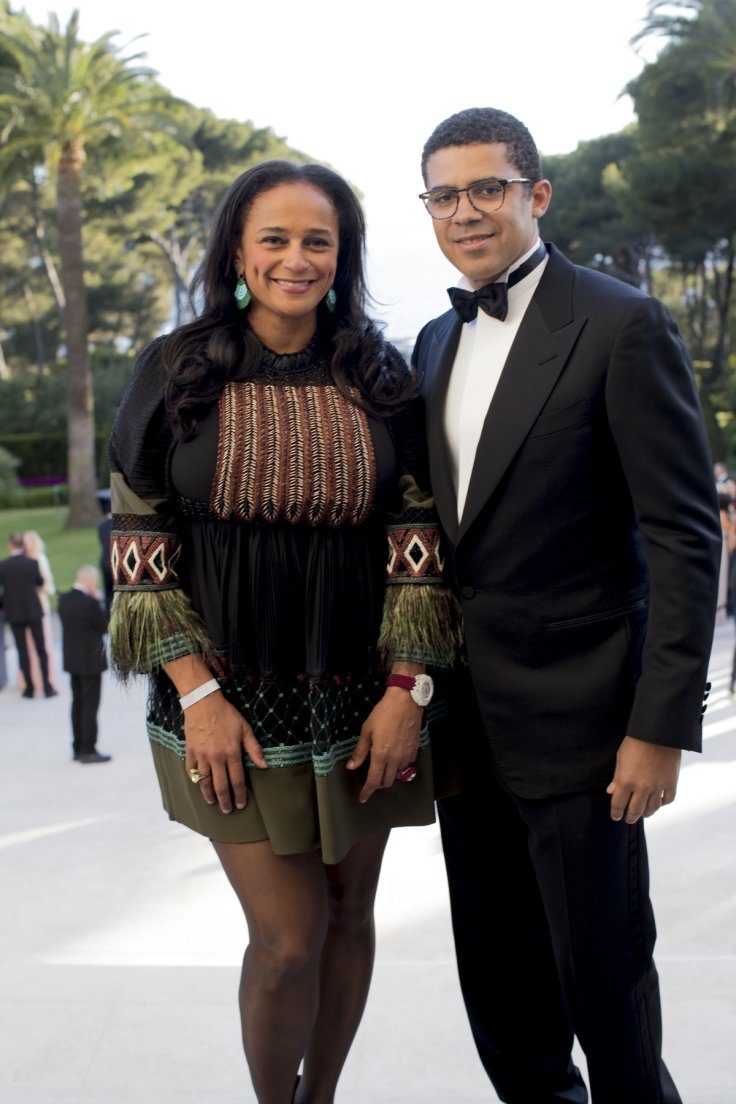
The Angolan businesswoman reacted to this news via social networks, saying that the truth “will prevail” and leaving her team a “message of tranquility and confidence”. ” We will continue every day, in every company, to do our best and to fight for what I believe for Angola “, we read in the message.
According to the decision of the provincial court of Luanda in Angola, the decision follows a precautionary order for the seizure of the assets of the three targeted persons requested by the Angolan state, which deserved approval favorable of the judges.
The Angolan State, represented by the prosecution, has developed detailed reasoning in which it maintains that Isabel dos Santos and her husband, the Congolese businessman and activist Sindika Dokolo, used funds, notably from Sonangol, to do business without paying it back.
By using offshore financial circuits, Isabel dos Santos and Sindika Dokolo have thus diverted and then “hidden” abroad astronomical amounts drawn from Angolan public funds. “Almost all [their] heritage is outside the country, leaving in Angola mainly social participations in several companies” , can be read in the order of the court of Luanda.
He adds that “it has also been proven that the defendant Isabel dos Santos tried to sell its stake in Unitel, tried to transfer large amounts of euros to Russia from Portugal via Leopoldino Fragoso do Nascimento, which was in contact with Invest in Japan, and a large part of their investments and assets are not in Angola “and that the amounts transferred by the State to luxury jewelry De Grisogono were sent to Isabel dos Santos and Sindika Dokolo .
 Angola
Leave a comment